Chemical characterization of Musa acuminata AAB Peels (Plantain, Blue Java)
Abstract
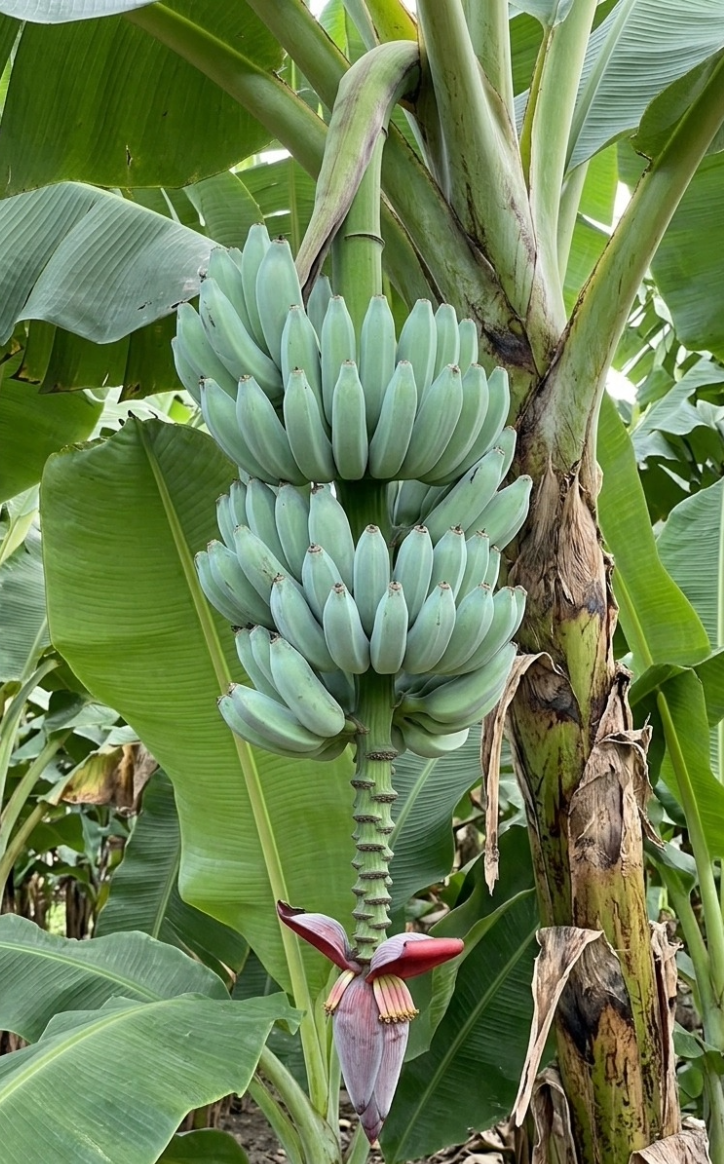
The peels of Musa acuminata constitute a by-product of interest due to their richness in metabolites that influence important biological activities. The objective of the study was to evaluate the chemical composition of the peels (maturation stage 1) of Musa acuminata AAB (Blue Java), through the application of chemical and physicochemical methods, for their utilization. A comparative study was carried out with a single experimental factor and two independent samples: treatment without antioxidants (ST) and treatment with antioxidants (T). The proximate analysis performed demonstrated the presence of fiber, proteins, and minerals; moreover, it was verified that the application of antioxidants does not alter the nutritional profile. The absence of heavy metals was confirmed, ensuring the safety of the samples. For the identification and structural characterization of specialized metabolites, an HPLC-MS-UV study was carried out, which allowed the identification of 9 flavonoid glycosides in the acetone extracts of the peels. A higher concentration of phenols and tannins (20.21 mg GAE.g-1; 8.36 mg GAE.g-1) was quantified in the samples treated with antioxidants (T) compared to the untreated samples (ST) (6.46 mg GAE.g-1; 1.71 mg GAE.g-1), demonstrating that the application of antioxidants inhibits oxidative degradation and preserves these metabolites. These findings show that the immature peels of Musa acuminata AAB of the Blue Java variety constitute a viable and safe source of phytonutrients and phenols. Additionally, the effectiveness of a treatment with antioxidants was confirmed for preserving these metabolites without compromising their nutritional composition.
Downloads
References
Anupama, Y. (2021). Banana (Musa acuminata): Most popular and common Indian plant with multiple pharmacological potentials. World Journal of Biology Pharmacy and Health Sciences, 7(1), 036–044. https://doi.org/10.30574/wjbphs.2021.7.1.0073
AOAC. (1988). AOAC 985.35. Minerals in infant formula,Enteral products,and Pet foods. Atomic absorption spectrophotometric method.
AOAC. (1990). AOAC 955.04. Nitrogen (Total) in fertilizers. Kjeldahl method.
AOAC. (1996). AOAC 991,36. Fat (Crude) in Meat and Meat Products - Solvent Extraction (Submersion) Method.
Apintanapong, M., Cheachumluang, K., Suansawan, P., & Thongprasert, N. (2007). Effect of antibrowning agents on banana slices and vacuum-fried slices. Journal of Food, Agriculture and Environment, 5(3–4), 151–157. https://pubag.nal.usda.gov/catalog/723488
Arrieta, A., Baquero, U., & Barrera, J. (2006). Caracterización fisicoquímica del proceso de maduración del plátano “Papocho” (Musa ABB Simmonds). Agronomía Colombiana, 24(1), 48–53. http://www.scielo.org.co/pdf/agc/v24n1/v24n1a06.pdf
Rodrigues Borges, A., Jungston Capistrano, A.P, Saatkamp, C., Silveira Utzig, L., Gonçalves Lopes, B., Candiani dos Santos, J., da Silva, A., Silva, M., Gonçalves, S., Amadeu Micke, G., Vitali, L., Cesar Sestile, C., Almida Zimmermann, L., Binder Neis, V., & Tenfen, A. (2021). HPLC-ESI-MS/MS phenolic profile of “Nanicao Corupá” (Musa acuminata). Rodriguesia, 72, e01052020. https://doi.org/10.1590/2175-7860202172127
Chauhan, S., Sindhu, K., Bhandari, M., Poudel, P., Yadav, R., Ranabhat, P., Shrestha, S., & Shrestha, A. (2025). Phytochemical Profiling and Biological Activities of Musa acuminata Peel with Antioxidant and α-Amylase Inhibitory Effects. Jabirian Journal of Biointerface Research in Pharmaceutics and Applied Chemistry, 1(6), 9–14. https://doi.org/10.55559/jjbrpac.v1i6.443
Miranda Martínez, M., & Cuéllar, A. (2014). Farmacognosia y productos naturales. Empresa Editorial Poligráfica Félix Varela, ISBN:978-959-237-809-4.440pp https://isbncuba.ccl.cerlalc.org/catalogo.php?mode=detalle&nt=25509
Cuesta Rubio, O., Márquez Hernández, I., & Campo Fernández, M. (2015). Introducción a la caracterización estructural de flavonoides. Editorial UTMACH,81pp/97KB. https://repositorio.utmachala.edu.ec/items/257de918-ce45-4bc1-ae66-4179624677d5
Enríquez Estrella, M., & Ojeda Caiza, G. (2020). Evaluación bromatológica de dietas alimenticias, con la inclusión de harina de plátano de rechazo. Revista ESPAMCIENCIA, 11(1), 12–18. https://doi.org/10.51260/revista_espamciencia.v11i1.200
Espinosa, A., & Santacruz, S. (2019). Compuestos fenólicos a partir de la corteza de Musa cavendish, Musa acuminata y Musa cavandanaish. Revista Politécnica, 38(2), 69. https://www.redalyc.org/articulo.oa?id=688773642009
Etienne, A., Génard, M., Bancel, D., Benoit, S., & Bugaud, C. (2013). A model approach revealed the relationship between banana pulp acidity and composition during growth and post harvest ripening. Scientia Horticulturae, 162, 125–134. https://doi.org/10.1016/J.SCIENTA.2013.08.011
Farmacopea Española. (2002). Real Farmacopea Española (Agencia Estatal Boletín Oficial del Estado, Ed.). https://cpage.mpr.gob.es/producto/real-farmacopea-espanola-5/
FAO-OMS. (1985). Codex Standard 152-1985: Norma del Codex para la harina de trigo. https://www.fao.org/fao-who-codexalimentarius/sh-proxy/en/?lnk=1&url=https%253A%252F%252Fworkspace.fao.org%252Fsites%252Fcodex%252FStandards%252FCXS%2B152-1985%252FCXS_152s.pdf
FAO-OMS. (2018). Codex Alimentarius Commission on contaminants in foods, Twelfth Session Report. Food and Agriculture Organization of the United Nations – World Health Organization. https://www.fao.org/fao-who-codexalimentarius/sh-proxy/it/?lnk=1&url=https%253A%252F%252Fworkspace.fao.org%252Fsites%252Fcodex%252FMeetings%252FCX-735-12%252FWD%252Fcf12_INF01x.pdf
Handayani, U. F., Putra, B. A., Endayani, A. S., Narwastu, A. R. D., & Sanjaya, R. (2023). Banana Waste (Musa acuminata Cavendish Subgroup) as A Sources Eco-Feed for Ruminants in Lampung Province: Potential and Nutrient Content. Jurnal Ilmiah Peternakan Terpadu, 11(2), 106. https://doi.org/10.23960/jipt.v11i2.p106-120
Islam, R., Kamal, M., Kabir, R., Hasan, M., Haque, R., & Hasan, K. (2023). Phenolic compounds and antioxidants activity of banana peel extracts: Testing and optimization of enzyme-assisted conditions. Measurement: Food, 10, 100085. https://doi.org/10.1016/j.meafoo.2023.100085
Khawas, P., & Deka, S. C. (2016). Comparative Nutritional, Functional, Morphological, and Diffractogram Study on Culinary Banana (Musa ABB) Peel at Various Stages of Development. International Journal of Food Properties, 19(12). https://doi.org/10.1080/10942912.2016.1141296
Mex-Álvarez, R.M., Guillen-Morales, M.M., Garma-Quen,P.M., Sarabia-Alcocer, B., Yanez-Nava, D., Kantún-Hass, J.L., & Novelo-Pérez, M.I. (2022). Actividad Antioxidante de Cochlospermum vitifolium. Journal of Agricultural Sciences Research, 2(15), 2–11. https://doi.org/10.22533/at.ed.9732152212114
Ortwerth, B.J., & Olesen, P.R. (1988). Ascorbic acid-induced crosslinking of lens proteins: evidence supporting a Maillard reaction. Biochimica et Biophysica Acta (BBA)/Protein Structure and Molecular, 956(1), 10–22. https://doi.org/10.1016/0167-4838(88)90292-0
Pilco, G., Borja, D., Goetschel, L., Andrade, P., Irazabal, J., Vargas-Jentzsch, P., Guil-Guerrero, J. L., Rueda-Ayala, V., & Ramos, L.A. (2018). Caracterización bromatológica y evaluación de la actividad antimi-crobiana en cáscara de banano ecuatoriano (Musa paradisiaca). Enfoque UTE, 9(2), 48–58. https://doi.org/https://doi.org/10.29019/enfoqueute.v9n2.297
Ramírez Céspedes, C., Tapia Fernández, A.C., & Calvo Brenes, P. (2010). Evaluación de la calidad de fruta de banano de altura que se produce en el cantón de Turrialba, Costa Rica. InterSedes; Revista de Las Sedes Regionales, 11(20), 107–127. http://www.redalyc.org/articulo.oa?id=66619992007
Shankar, G., Jeevitha, P., & Shadeesh, L. (2017). Nutritional Analysis of Musa Acuminata. Research & Reviews: Journal of Food and Dairy Technology, 5(4). https://www.rroij.com/open-access/nutritional-analysis-of-musa-acuminata-.php?aid=86548
Silva, V., Arquelau, P., Silva, M., Augusti, R., Meloc, J., & Fantea, C. (2020). Use of paper spray-mass spectrometry to determine the chemical profile of ripe banana peel flour and evaluation of its physicochemical and antioxidant properties. Quimica Nova, 43(5), 579-585. https://doi.org/10.21577/0100-4042.20170521
Singleton, V., Orthofer, R., & Lamuela-Raventós, R. (1999). Analysis of total phenols and other oxidation substrates and antioxidants by means of folin-ciocalteu reagent. Methods in Enzymology, 299, 152–178. https://doi.org/10.1016/S0076-6879(99)99017-1
Tilley, A., McHenry, M., McHenry, J., Solah, V., & Bayliss, K. (2023). Enzymatic browning: The role of substrates in polyphenol oxidase mediated browning: Mechanisms of enzymatic browning. Current Research in Food Science, 7, 100623. https://doi.org/10.1016/j.crfs.2023.100623
Tapia Romero, M.C., Tituana Mendoza, M.A., Márquez Hernández, I., Campo Fernández, M., Cuesta Rubio, O., & Matute Castro, N.L. (2025). Estudios químicos de subproductos de Musa paradisiaca L. (Plantain, Dominico). Revista de la Universidad Del Zulia, 16(46), 58-78. https://doi.org/10.5281/zenodo.15310752
Vu, H.T, Scarlett, C.J, & Vuong, Q.V. (2018). Phenolic compounds within banana peel and their potential uses: A review. Journal of Functional Foods, 40, 238–248. https://doi.org/10.1016/J.JFF.2017.11.006
Copyright (c) 2026 Karelys Brigitte Tandazo Atancuri, Jhomara Matilde Pindo Caiminagua, Ingrid Márquez Hernández, Mercedes Campo Fernández, Osmany Cuesta Rubio, Nubia Lisbeth Matute Castro

This work is licensed under a Creative Commons Attribution-NonCommercial-ShareAlike 4.0 International License.