Exogenous applied proline may enhance the tolerance of sweet sorghum (Sorghum bicolor (L.) Moench) under water deficit stress
Abstract
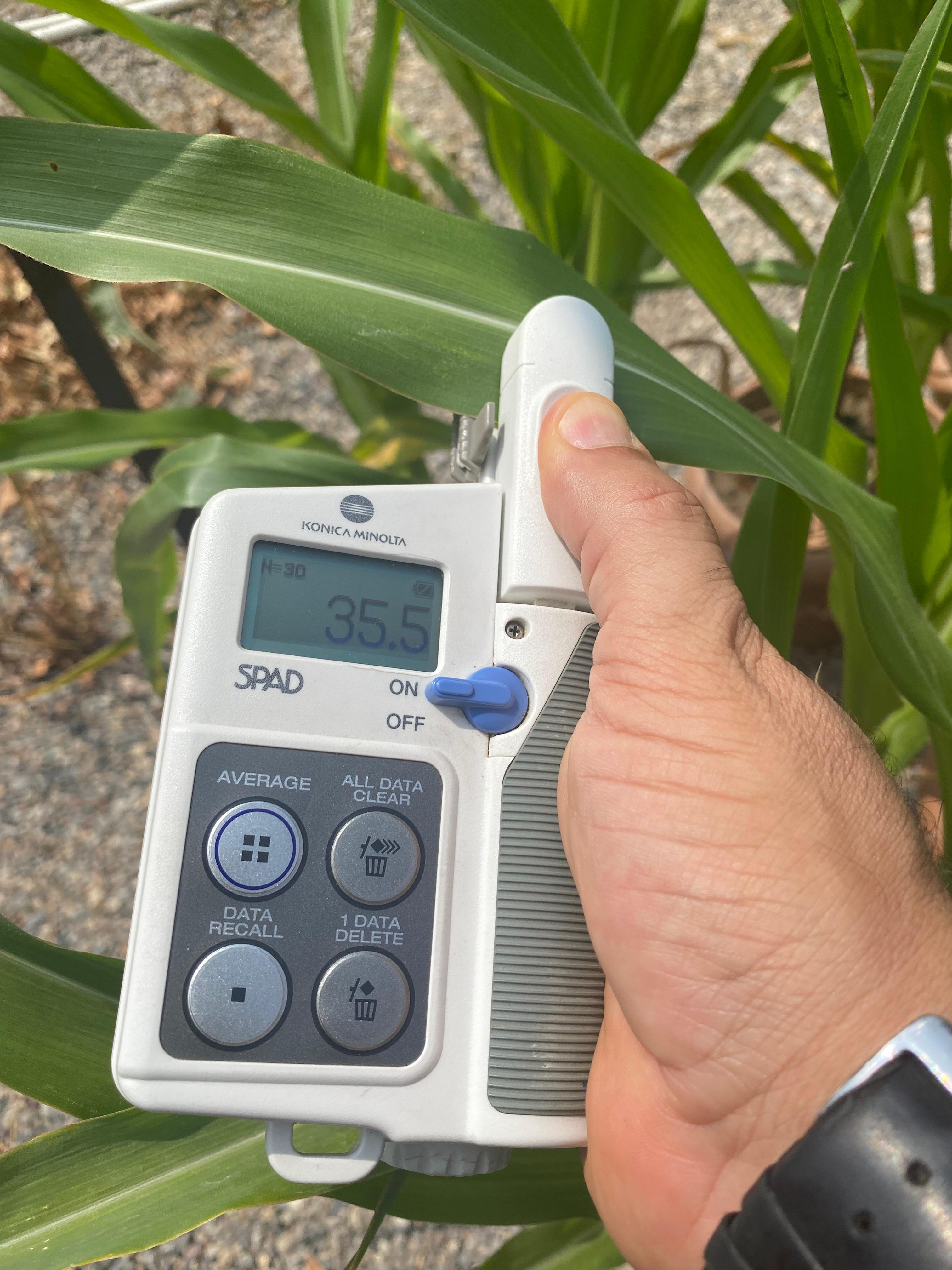
Drought is a major abiotic stress that threatens global food security by reducing crop yield and quality. Foliar application of osmoprotectants such as proline offers a promising means to mitigate drought-induced damage. This study examined the effects of exogenous proline (P0, P200, P400, and P600 mg.L-1), sorghum genotype, and their interaction on morphological, physiological, biochemical, forage quality, and microbial traits under different drought levels (I100, I75, I50, and I25). Proline application increased dry matter by over 100 % under medium to severe deficits and enhanced root dry weight by 90 % at 75 % water reduction. The strongest response occurred in chlorophyll content (SPAD), reflecting improved photosynthetic stability. Exogenous proline reduced leaf drying by 25 % and alleviated drought-related declines in forage quality, as evidenced by improvements in NDF, ADF, and ADL. It also boosted peroxidase activity more than superoxide dismutase and catalase, minimizing hydrogen peroxide (H₂O₂) toxicity and oxidative stress. Even under extreme drought (I25), proline maintained plant vigor and improved water-use efficiency by 25 - 40 % at the seedling stage. Compared with the control, leaf chlorophyll content (SPAD values) decreased by 13.91 %, 24.28 %, and 31.85 % under the I75, I50, and I25 treatments, respectively, suggesting that SPAD measurements at the seedling stage may serve as a practical and cost-effective indicator for identifying drought-tolerant sorghum genotypes.
Downloads
References
Ali, Z., Merrium, S., Habib-Ur-Rahman, M., Hakeem, S., Saddique, M. A. B., & Sher, M. A. (2022). Wetting mechanism and morphological adaptation; leaf rolling enhancing atmospheric water acquisition in wheat crop. Environmental Science and Pollution Research, 29, 30967-30985. https://doi.org/10.1007/s11356-022-18846-3
Bänzinger, M., Edmeades, G. O., Beck, D., & Bellon, M. (2000). Breeding for drought and nitrogen stress tolerance in Maize: from theory to practice. pp.68. http://hdl.handle.net/10883/765
Blessington, T., Mitcham, E. J., & Harris, L. J. (2014). Growth and survival of enterobacteriaceae and inoculated salmonella on walnut hulls and maturing walnut fruit. Journal of Food Protection, 77(9), 1462-1470. http://doi.org/10.4315/0362-028X.JFP-14-075
Cheng, M., Wang, H., Fan, J., Zhang, F., & Wang, X. (2021). Effects of soil water deficit at different growth stages on corn growth, yield, and water use efficiency under alternate partial root-zone irrigation. Water, 13, 148. http:// doi.org/10.3390/w13020148
Ferreira, G,, Burch, A,, Martin, L, L., Hines, S. L., Shewmaker, G. E., & Chahine, M. (2021). Effect of drought stress on in situ ruminal starch degradation kinetics of corn for silage. Animal Feed Science and Technology, 279, 115027. https://doi.org/10.1016/j.anifeedsci.2021.115027
George, T. T., Obilana, A. O., Oyenihi, A. B., Obilana, A. B., Akamo, D. O., & Awika, J. M. (2022). Trends and progress in sorghum research over two decades, and implications to global food security. South African Journal of Botany, 151, 960-969. https://doi.org/10.1016/j.sajb.2022.11.025
Hayat, S., Hayat, Q., Alyemeni, M. N., Wani, A. S., Pichtel, J., & Ahmad, A. (2012). Role of proline under changing environments: a review. Plant signaling & behavior, 7(11), 1456–1466. https://doi.org/10.4161/psb.21949
Ibrahim, A. E-A., Abd El Mageed, T., Abohamid, Y., Abdallah, H., El-Saadony, M., AbuQamar, S., El-Tarabily, K., & Abdou, N. (2022). Exogenously applied proline enhances morph-physiological responses and yield of drought-stressed corn plants grown under different irrigation systems. Frontiers Plant Science, 13, 897027. http:// doi.org/10.3389/fpls.2022.897027
ISO, (2017). Microbiology of food chain - Horizontal method for the detection and enumeration of Enterobacteriaceae - Part 2: Colony-count technique. https://www.iso.org/obp/ui/en/#iso:std:iso:21528:-2:ed-2:v2:en
Jack, C. N., Row, S. L., Porter, S. S., & Friesen, M. L. (2019). A high-throughput method of analyzing multiple plant defensive compounds in minimized sample mass. Applications in Plant Sciences, 7(1), e01210. http:// doi.org/10.1002/aps3.1210
Kale, H., Kaplan, M., Ulger, I., Unlukara, A., & Akar, T. (2018). Feed value of corn (Zea mays var. indentata (sturtev.) l.h. bailey) grain under different irrigation levels and nitrogen doses. Turkish Journal Field Crops, 23(1), 56-61. http:// doi.org/10.17557/tjfc.421974
Kalhoro, S., Ding, K., Zhang, B., Chen, W., Hua, R., Shar, D., & Xuexuan, X. (2018). Soil infiltration rate of forestland and grassland over different vegetation restoration periods at Loess Plateau in northern hilly areas of China. Landscape and Ecological Engineering, 15. https:// doi.org/10.1007v/s11355-018-0363-0
Khan, P., Abdelbacki, A. M. M., Albaqami, M., Jan, R., & Kim, K. M. (2025). Proline promotes drought tolerance in maize. Biology, 14, 41. https://doi.org/10.3390/biology14010041
Kordas, L., Lejman, A., Kuc, P., Szlachta, J., Fugol, M., & Prask, H. (2024). The reaction of maize and sorghum to fertilization with granulated fertilizer obtained from digestate. Polish Journal of Environmental Studies, 33(2), 1215-1223. http:// doi.org/10.15244/pjoes/172049
Li, H., Liu, Y., Zhen, B., Lv, M., Zhou, X., Yong, B., Niu, Q., & Yang, S. (2024). Proline spray relieves the adverse effects of drought on wheat flag leaf function. Plants, 13(7), 957. https://doi.org/10.3390/plants13070957
Marček, T., Hamow, K. Á., Végh, B., Janda, T., Darko, E., & Lambreva, M. D. (2019). Metabolic response to drought in six winter wheat genotypes. PLOS One, https://doi.org/10. 1371/ journal.pone.0212411
Mi, N., Cai, F., Zhang, Y. S., Ji, R. P., Zhang, S. J., & Wang, Y. (2018). Differential responses of corn yield to drought at vegetative and reproductive stages. Plant Soil and Environment, 64(6), 260-267. https://doi.org/10.17221/141/2018-PSE
Mittler, R., Zandalinas, S. I., Fichman, Y., & Van Breusegem, F. (2022). Reactive oxygen species signalling in plant stress responses. Nature Reviews Molecular Cell Biology, 23, 663-679. https://doi.org/10.1038/s41580-022-00499-2
Nguyen, H. C., Lin, K. H., Ho, S. L., Chiang, C. M., & Yang, C. M. (2018). Enhancing the abiotic stress tolerance of plants: From chemical treatment to biotechnological approaches. Physiologia Plantarum, 164, 452-466. http:// doi.org/10.1111/ppl.12812
Noein, B., & Soleymani, A. (2022). Corn (Zea mays L.) physiology and yield affected by plant growth regulators under drought stress. Journal of Plant Growth Regulation, 41, 672-681. https://doi.org/10.1007/s00344-021-10332-3
Shah, A. A., Khan, W. U., Yasin, N. A., Akram, W., Ahmad, A., & Abbas, M. (2020). Butanolide alleviated cadmium stress by improving plant growth, photosynthetic parameters and antioxidant defense system of Brassica oleracea. Chemosphere, 261, 127728. http:// doi.org/10.1016/j.chemosphere.2020.127728
Sher, A., Hassan, M. U., Sattar, A., Ul-Allah, S., Ijaz, M., Hayyat, Z., Bibi, Y., Hussain, M., & Qayyum, A. (2023). Exogenous application of melatonin alleviates the drought stress by regulating the antioxidant systems and sugar contents in sorghum seedlings. Biochemical Systematics and Ecology 107, 104620. https://doi.org/10.1016/j.bse.2023.104620
Smart, R. E., & Bingham, G. E. (1974). Rapid estimates of relative water content. Plant Physiology, 53(2), 258-260. https://doi.org/10.1104/pp.53.2.258
Trovato, M., Forlani, G., Signorelli, S., & Funck, D. (2019). Proline metabolism and it’s functions in development and stress tolerance. In book: Osmoprotectant-Mediated Abiotic Stress Tolerance in Plants (pp.41-72). Springer Nature Switzerland. http://doi.org/10.1007/978-3-030-27423-8 2
Van Soest, P. J., Robertson, J. B., & Lewis, B. A. (1991). Methods for dietary fiber, neutral detergent fiber, and non starch polysaccharides in relation to animal nutrition. Journal of Dairy Science, 74, 3583-3597. https://doi.org/10.3168/jds.S0022-0302(91)78551-2
Velikova, V., Yordanov, I., & Edreva, A. (2000). Oxidative stress and some antioxidant systems in acid rain-treated bean plants: protective role of exogenous polyamines. Plant Science, 151(1), 59-66. https://doi.org/10.1016/S0168-9452(99)00197-1
Yahaya, M. A., & Shimelis, H., (2021). Drought stress in sorghum: Mitigation strategies, breeding methods and technologies. Journal of Agronomy and Crop Science, 208, 127-142. https://doi.org/10.1111/jac.12573
Zahra, N., Hafeez, M. B., Kausar, A., Alzeidi, M., Asekova, S., Siddique, K. H. M., & Farooq, M. (2023). Plant photosynthetic responses under drought stress: Effects and management. Journal of Agronomy and Crop Science, 209, 651-672. https://doi.org/10.1111/jac.12652
Zhang, R., Yang, P., Liu, S.,Wang, C., & Liu, J. (2022). Evaluation of the methods for estimating leaf chlorophyll content with SPAD Chlorophyll Meters. Remote Sensing, 14, 5144. https://doi.org/10.3390/rs14205144
Copyright (c) 2026 Timuçin Taş, Orkun Babacan, Tülay Turgut Genç, Yahya Işik, Hüseyin Güngör

This work is licensed under a Creative Commons Attribution-NonCommercial-ShareAlike 4.0 International License.