Bacterias rizosf�ricas promotoras del crecimiento vegetal (PGPR) en plantas de ma�z
Resumen
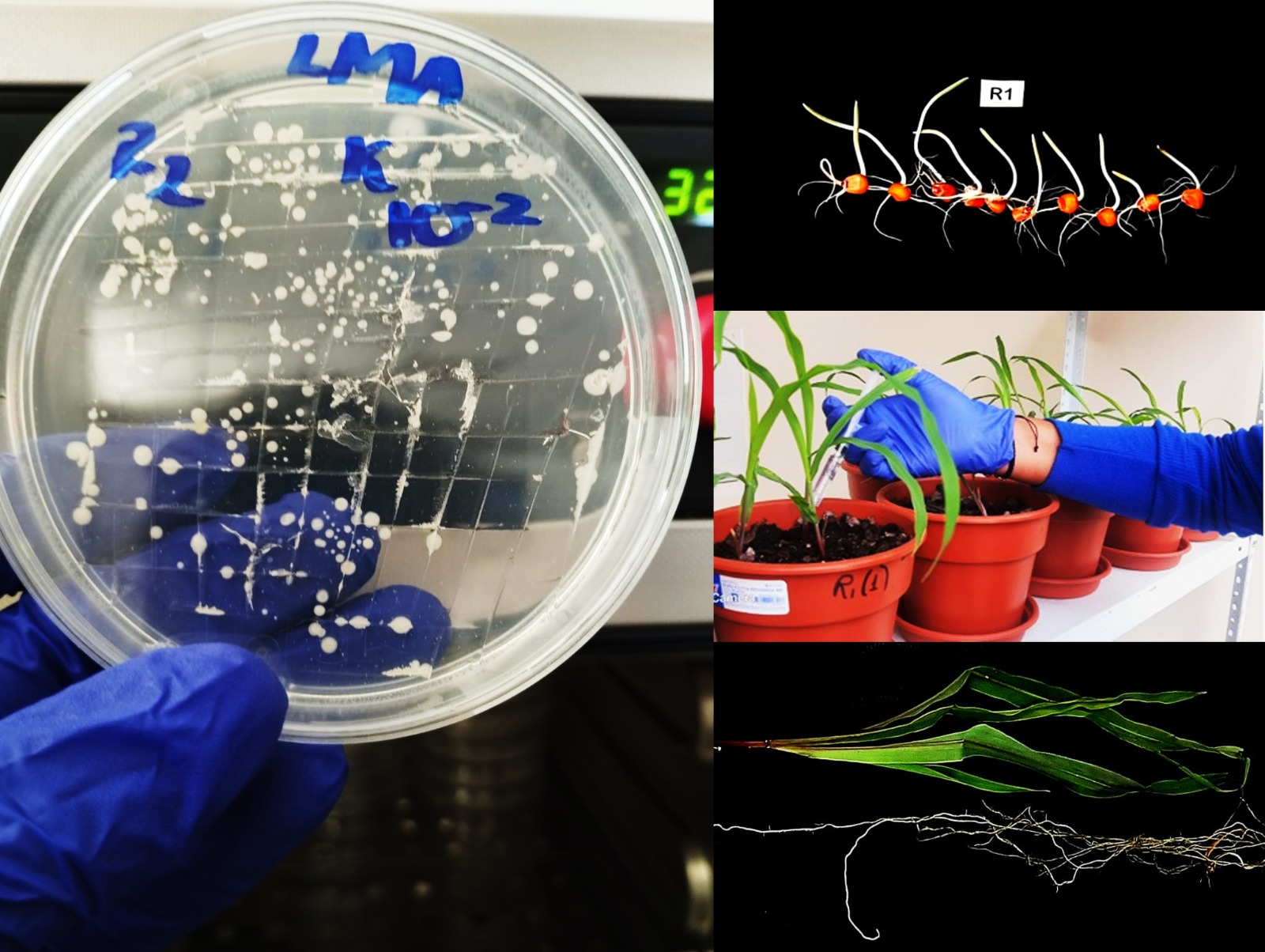
Las PGPR se consideran una alternativa sostenible para mejorar la productividad de los cultivos, por su capacidad de bioestimular el crecimiento vegetal, inducir resistencia sistémica, aumentar la tolerancia al estrés abiótico, entre otros beneficios. El objetivo del estudio consistió en evaluar el efecto de las bacterias rizosféricas promotoras del crecimiento vegetal (PGPR) sobre la germinación y el desarrollo de plantas de maíz. Se reactivaron siete cepas obtenidas del Centro de Investigación Biotecnológica (CEB) de la Universidad Estatal Península de Santa Elena, Ecuador, se inocularon semillas de maíz y fueron sembradas para evaluar la germinación y el desarrollo vegetal en dos etapas (laboratorio y vivero). Las rizobacterias promovieron significativamente la germinación hasta un 17 %, la emergencia y crecimiento inicial del maíz, especialmente las especies Stenotrophomonas pavanii y Pantoea dispersa. Además, la especie P. dispersa (b) aumentó la densidad estomática en ambas superficies foliares, lo que podría estar asociado con una mejor eficiencia fotosintética y un mejor uso del agua. Las cepas S. pavanii y P. dispersa promovieron la germinación y el crecimiento del maíz Azor, el análisis filogenético indicó agrupaciones cercanas con aislados de referencia por su eficacia con potencial significativo como (PGPR) con capacidades biotecnológicas documentadas para los géneros Pantoea y Stenotrophomonas.
Descargas
Citas
Amezquita-Aviles, C. F., Coronel-Acosta, C. B., Santos-Villalobos, S. D. L., Santoyo, G., & Parra-Cota, F. I. (2022). Characterization of native plant growth-promoting bacteria (PGPB) and their effect on the development of maize (Zea mays L.). Biotecnia, 24(1), 15-22. https://doi.org/10.18633/biotecnia.v24i1.1353
Bresson, J., Varoquaux, F., Bontpart, T., Touraine, B., & Vile, D. (2013). The PGPR strain Phyllobacterium brassicacearum STM196 induces a reproductive delay and physiological changes that result in improved drought tolerance in Arabidopsis. New Phytologist, 200(2), 558-569. https://doi:10.1111/nph.12383
Backer, R., Rokem, J. S., Ilangumaran, G., Lamont, J., Praslickova, D., Ricci, E., & Smith, D. L. (2018). Plant growth-promoting rhizobacteria: context, mechanisms of action, and roadmap to commercialization of biostimulants for sustainable agriculture. Frontiers in Plant Science, 9, 1473. https://doi:10.3389/fpls.2018.01473
Bhardwaj, D., Ansari, M. W., Sahoo, R. K., & Tuteja, N. (2014). Biofertilizers function as key player in sustainable agriculture by improving soil fertility, plant tolerance and crop productivity. Microbial Cell Factories, 13(1), 66. https://doi.org/10.1186/1475-2859-13-66
Bouremani, N., Cherif-Silini, H., Silini, A., Bouket, A. C., Luptakova, L., Alenezi, F. N., & Belbahri, L. (2023). Plant growth-promoting rhizobacteria (PGPR): A rampart against the adverse effects of drought stress. Water, 15(3), 418. https://doi.org/10.3390/w15030418
Danish, S., Zafar-ul-Hye, M., Mohsin, F., & Hussain, M. (2020). ACC-de aminase producing plant growth promoting rhizobacteria and biochar mitigate adverse effects of drought stress on maize growth. PLoS ONE, 15(4), e0230615. https://doi.org/10.1371/journal.pone.0230615
de Andrade, L. A., Santos, C. H. B., Frezarin, E. T., Sales, L. R., & Rigobelo, E. C. (2023). Plant growth-promoting rhizobacteria for sustainable agricultural production. Microorganisms, 11(4), 1088. https://doi.org/10.3390/microorganisms11041088
Di Rienzo, J. A., Casanoves, F., Balzarini, M. G., González, L., Tablada, M., Robledo, C. W. (2020). InfoStat versión 2020. Centro de Transferencia InfoStat, FCA, Universidad Nacional de Córdoba, Argentina. URL http://www.infostat.com.ar
Eshaghi, E., Mousae, S., Hendiyani, A., Khave, A. H., & Nosrati, R. (2024). Evaluation of the potential of multi-trait PGPR isolates as inoculants for maize (Zea mays L.) growth. Iranian Journal of Microbiology, 16(6), 812. https://doi.org/10.18502/ijm.v16i6.17260
Eshaghi Gorgi, O., Fallah, H., Niknejad, Y., & Barari Tari, D. (2022). Effect of plant growth promoting rhizobacteria (PGPR) and mycorrhizal fungi inoculations on essential oil in Melissa officinalis L. under drought stress. Biologia, 77(1), 11-20. https://doi.org/10.1007/s11756-021-00919-2
Ferrante, R., Campagni, C., Vettori, C., Checcucci, A., Garosi, C., & Paffetti, D. (2024). Meta-analysis of plant growth-promoting rhizobacteria interaction with host plants: implications for drought stress response gene expression. Frontiers in Plant Science, 14, 1282553. https://doi:10.3389/fpls.2023.1282553
Guevara-López, A., Alvarado López, C. J., López-Vázquez, J. S., Cristóbal-Alejo, J., Tun-Suárez, J. M., Garruña-Hernández, R., & Ruiz-Sánchez, E. (2025). Evaluación de inoculantes microbianos en el intercambio de gases, biomasa y componentes del rendimiento de maíz criollo en suelo Leptosol de Yucatán. Biotecnia, 27, e2559. https://doi.org/10.18633/biotecnia.v27.2559
Liu, J., Zhang, J., Shi, Q., Liu, X., Yang, Z., Han, P., Li, J., Wei, Z., Hu, T., & Liu, F. (2023). The interactive effects of deficit irrigation and Bacillus pumilus inoculation on growth and physiology of tomato plant. Plants (Basel, Switzerland), 12(3), 670. https://doi.org/10.3390/plants12030670
Mareque, C., & Battistoni, F. (2025). Endophytic interaction of the plant growth-promoting strain Pantoea dispersa UYSB45 and sweet sorghum (Sorghum bicolor) plants. Plant and Soil, 515, 407-422. https://doi.org/10.1007/s11104-025-07598-x
Noumavo, P. A., Kochoni, E., Didagbé, Y. O., Adjanohoun, A., Allagbé, M., Sikirou, R., & Baba-Moussa, L. (2013). Effect of different plant growth promoting rhizobacteria on maize seed germination and seedling development. American Journal of Plant Sciences, 4(5), 1013-1021. https://doi:10.4236/ajps.2013.45125
Peng, J., Ma, J., Wei, X., Zhang, C., Jia, N., Wang, X., & Wang, Z. (2021). Accumulation of beneficial bacteria in the rhizosphere of maize (Zea mays L.) grown in a saline soil in responding to a consortium of plant growth promoting rhizobacteria. Annals of Microbiology, 71(1), 40. https://doi.org/10.1186/s13213-021-01650-8
Pereira, S. I. A., Abreu, D., Moreira, H., Vega, A., & Castro, P. M. L. (2020). Plant growth-promoting rhizobacteria (PGPR) improve the growth and nutrient use efficiency in maize (Zea mays L.) under water deficit conditions. Heliyon, 6(10), e05106. https://doi.org/10.1016/j.heliyon.2020.e05106
Pérez-Pérez, R., Oudot, M., Hernández, I., Nápoles, M. C., Pérez-Martínez, S., & Sosa-Del Castillo, D. (2020). Aislamiento y caracterización de Stenotrophomonas asociada a rizosfera de maíz (Zea Mays L.). Cultivos Tropicales, 41(2), e03. https://ediciones.inca.edu.cu/index.php/ediciones/article/view/1547
Posada, A., Mejía, D., Polanco-Echeverry, D., & Cardona, J. (2021). Rizobacterias promotoras de crecimiento vegetal (PGPR): Una revisión sistemática 1990-2019. Revista de Investigación Agraria y Ambiental, 12(2), 161-178. http://portal.amelica.org/ameli/jatsRepo/130/1302302012/index.html
Quach, N. T., Nguyen, T. T. A., Vu, T. H. N., Le, T. T. X., Nguyen, T. T. L., Chu, H. H., & Phi, Q. T. (2025). Phenotypic and genomic analysis deciphering plant growth promotion and oxidative stress alleviation of Stenotrophomonas sepilia ZH16 isolated from rice. Microbiology, 94(1), 38-49. https://doi.org/10.1134/S0026261723602749
Rayyif, S. M. I., Alwan, W. N., Mohammed, H. B., Barbu, I. C., Holban, A. M., Gheorghe, I., & Mihaescu, G. (2022). Snapshot of resistance and virulence features in ESCAPE strains frequently isolated from surgical wound infections in a Romanian hospital. Revista Romana de Medicina de Laborator, 30(2), 215-226. https://doi.org/10.2478/rrlm-2022-0014
Ríos-Ruiz, W. F., Tarrillo-Chujutalli, R. E., Rojas-García, J. C., Tuanama-Reátegui, C., Pompa-Vásquez, D. F., & Zumaeta-Arévalo, C. A. (2024). The biotechnological potential of plant growth-promoting rhizobacteria isolated from maize (Zea mays L.) cultivations in the San Martin region, Peru. Plants, 13(15), 2075. https://doi:10.3390/plants13152075
Rivera-Hernández, G., Tijerina-Castro, G. D., Cortés-Pérez, S., Ferrera-Cerrato, R., & Alarcón, A. (2024). Evaluation of functional plant growth-promoting activities of culturable rhizobacteria associated to tunicate maize (Zea mays var. tunicata A. St. Hil), a Mexican exotic landrace grown in traditional agroecosystems. Frontiers in Microbiology, 15, 1478807. https://doi.org/10.3389/fmicb.2024.1478807
Serna, L. (2022). Maize stomatal responses against the climate change. Frontiers in Plant Science, 13, 952146. https://dx.doi.org/10.3389/fpls.2022.952146
Singh, P., Singh, R. K., Li, H. B., Guo, D. J., Sharma, A., Lakshmanan, P., Malviya, M. K., Song, X. P., Solanki, M. K., Verma, K. K., Yang, L. T., & Li, Y. R. (2021). Diazotrophic bacteria Pantoea dispersa and Enterobacter asburiae promote sugarcane growth by inducing nitrogen uptake and defense-related gene expression. Frontiers in Microbiology, 11, 600417. https://doi.org/10.3389/fmicb.2020.600417
Soto, J., Julio, A., Crespo, L., Borbor, G., & Borbor, V. (2016). Efecto de la inoculación de bacterias nativas en dos híbridos de maíz (Zea mays L.), provincia de Santa Elena. Revista Científica y Tecnológica UPSE, 3(2), 50-60. https://doi.org/10.26423/rctu.v3i2.154
Upadhyay, S. K., & Chauhan, P. K. (2022). Optimization of eco-friendly amendments as sustainable asset for salt-tolerant plant growth-promoting bacteria mediated maize (Zea mays L.) plant growth, Na uptake reduction and saline soil restoration. Environmental Research, 211, 113081. https://doi.org/10.1016/j.envres.2022.113081
Vera, J., Sarango, Y., Villamar, M., Ortiz, J., Sevilla-Carrasco, J., Duarte, J., & Lucas, L. (2025). Effect of herbicides on the growth of beneficial microorganisms in rhizospheric soil. Revista de la Facultad de Agronomía de la Universidad del Zulia, 42(2), e254222. https://produccioncientificaluz.org/index.php/agronomia/article/view/43831
Wahab, A., Bibi, H., Batool, F., Muhammad, M., Ullah, S., Zaman, W., & Abdi, G. (2024). Plant growth-promoting rhizobacteria biochemical pathways and their environmental impact: A review of sustainable farming practices. Plant Growth Regulation, 104(2), 637-662. https://doi.org/10.1007/s10725-024-01218-x
Waday, Y. A., Girma Aklilu, E., Bultum, M. S., Ramayya Ancha, V., & Beyene, D. (2022). Isolation and characterization of plant growth‐promoting rhizobacteria from coffee plantation soils and its influence on maize growth. Applied and Environmental Soil Science, 2022(1), 5115875. https://doi.org/10.1155/2022/5115875
Yuan, Y., Shi, Y., Liu, Z., Fan, Y., Liu, M., Ningjing, M., & Li, Y. (2023). Promotional properties of ACC deaminase-producing bacterial strain DY1-3 and its enhancement of maize resistance to salt and drought stresses. Microorganisms, 11(11), 2654. https://doi.org/10.3390/microorganisms11112654
Zhang, C., Jin, Y., Wang, J., Zhang, Y., Zhao, Y., Lu, X., & Guo, X. (2025). Analysis of stomatal characteristics of maize hybrids and their parental inbred lines during critical reproductive periods. Frontiers in Plant Science, 15, 1442686. https://doi.org/10.3389/fpls.2024.1442686
Derechos de autor 2026 Javier Oswaldo Soto-Valenzuela, Verónica Cristina Andrade-Yucailla, Ligia Araceli Solís-Lucas, José Humberto Vera-Rodríguez, Allison Muyudumbay, Anthony Daniel Perero-Perero

Esta obra está bajo licencia internacional Creative Commons Reconocimiento-NoComercial-CompartirIgual 4.0.