In vitro evaluation of agro-industrial by-products as alternative feed sources for guinea pigs (Cavia porcellus)
Abstract
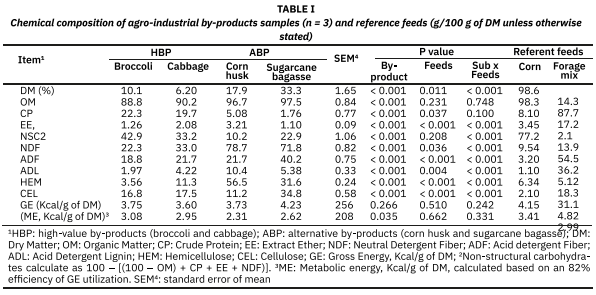
The guinea pig (Cavia porcellus) is a fiber-adapted herbivorous rodent with a particular digestive system based on cecal fermentation to maximize nutrient utilization. However, Knowledge regarding the nutritional requirements of guinea pigs and the evaluation of feedstuffs remains limited. This study assessed the in vitro digestibility of agro- industrial by-products as alternative feed sources for guinea pigs, using a three-phase digestion model simulating gastric, intestinal, and cecal fermentation. Agro-industrial by-products from horticultural sources (broccoli and cabbage) and agricultural sources (corn husk and sugarcane bagasse), as well as a conventional guinea pigs diet, were evaluated. Chemical composition, in vitro dry matter digestibility, and gas production throughout cecal fermentation were determined. Significant differences in chemical composition were observed among the tested by-products. Horticultural wastes showed lower fiber and higher crude protein content (19.7 – 22.3 %) compared to agricultural by-products (1.76 – 5.08 %, P < 0.05). In vitro dry matter digestibility was higher (67 – 73 %, P < 0.05) in horticultural by-products, whereas gas production was lower in corn husk and sugarcane bagasse (253 – 290 mL/g of DM), exhibiting lower fermentative activity. In conclusion, agro-industrial by-products represent a feasible nutritional alternative for guinea pigs, and horticultural residues demonstrating superior digestibility and fermentative potential (574 – 587 mL/g of DM). These findings support the development of more sustainable and cost-effective feeding strategies for guinea pig production, while also providing a non-invasive alternative that eliminates the need for animal slaughter.
Downloads
References
De Cuyper A, Winkler De, Tütken T, Bosch G, Hummel J, Kreuzer M, Muñoz A, Geert PJ, Clauss M. Digestion of bamboo compared to grass and lucerne in a small hindgut fermenting herbivore, the guinea pig (Cavia porcellus). J. Exp. Zool. A. Ecol. Integr. Physiol. [Internet]. 2022; 337(2):128-140. doi: https://doi.org/rcm6
Castro-Bedriñana J, Chirinos-Peinado D. Nutritional value of some raw materials for guinea pigs (Cavia porcellus) feeding. Transl. Anim. Sci. [Internet]. 2021; 5(2): txab019. doi: https://doi.org/kc89
National Research Council (NRC). Nutrient requirements of laboratory animals. In: Nutrient Requirements of Laboratory Animals. Fourth Revised Edition. Washington, DC, USA: National Academies Press. 1995 [cited 22 Jan 2026]. Available in: https://goo.su/31yOPR6
Quesenberry KE. Guinea pigs. Vet. Clin. North. Am. Small Anim. Pract. [Internet]. 1994; 24(1):67-87. doi: https://doi.org/rcnb
Westmont V. Of guinea pigs and tourists: sustainable development, sustainable tourism, and "local food" in Cusco, Peru. Tour. Plan. Dev. [Internet]. 2021; 18(1):45-67. doi: https://doi.org/rcnc
Abad-Guzmán R, Larrea-Dávalos JA, Carabaño R, García J, Carro MD. Influence of inoculum type (ileal, caecal and faecal) on the in vitro fermentation of different sources of carbohydrates in rabbits. World Rabbit Sci. [Internet]. 2018; 26(3):227-240. doi: https://doi.org/rcqs
Ocasio-Vega C, Abad-Guamán R, Delgado R, Carabaño R, Carro MD, García J. Effect of cellobiose supplementation and dietary soluble fibre content on in vitro caecal fermentation of carbohydrate-rich substrates in rabbits. Arch. Anim. Nutr. [Internet]. 2018; 72(3):221-238. doi: https://doi.org/g55bm2
Haro AN, Saldaña DR, Jacome AS, Rojas AV, Saavedra MAP. Análisis de la composición química y fermentación ruminal in vitro de alimentos fibrosos en ganado ovino. RECIENA. [Internet]. 2024; 4(1):115-120. doi: https://doi.org/rcat
Bindelle J, Ilunga Y, Delacollette M, Kayij MM, Di M'balu JU, Kindele E, Buldgen A. Voluntary intake, chemical composition and in vitro digestibility of fresh forages fed to guinea pigs in periurban rearing systems of Kinshasa (Democratic Republic of Congo). Trop. Anim. Health Prod. [Internet]. 2007; 39:419-426. doi: https://doi.org/bprkd6
Haro AN, Carro MD, De Evan T, González J. Influence of feeding sunflower seed and meal protected against ruminal fermentation on ruminal fermentation, bacterial composition and in situ degradability in sheep. Arch. Anim. Nutr. [Internet]. 2020; 74(5):380-396. doi: https://doi.org/rcqv
Goering HK, Van Soest PJ. Forage fiber analyses (apparatus, reagents, procedures, and some applications). In: Agriculture Handbook. No. 379. Washington, DC, USA: US Department of Agriculture, Agricultural Research Service. 1970 [cited 15 Jan 2026]. Available in: https://goo.su/UZ2bNNg
Association of Official Agricultural Chemists (AOAC). Official Methods of Analysis of AOAC International. In: Horwitz W, Latimer GW, editors. 18th Ed. Gaithersburg, Maryland, USA: AOAC International. 2005 [cited 15 Jan 2026]. Available in: https://goo.su/9Mf7iq
Van Soest PV, Robertson JB, Lewis BA. Methods for dietary fiber, neutral detergent fiber, and nonstarch polysaccharides in relation to animal nutrition. J. Dairy Sci. [Internet]. 1991; 74(10):3583-3597. doi: https://doi.org/b6c78f
Statistical Analysis System (SAS). Institute Inc. SAS software, version 9.4. Cary, North Carolina, USA: SAS Institute Inc. 2021 [cited 15 Jan 2026]. Available in: https://goo.su/UtiQti
Bakshi MPS, Wadhwa M, Makkar HP. Waste to worth: vegetable wastes as animal feed. CABI Rev. [Internet]. 2016; 1-26. doi: https://doi.org/rcq8
Mansour AA, Shekib LA, Elshimy NM, Sharara MS. Biological evaluation of raw and steamed broccoli and cauliflower as sources of dietary fibers. J. Food Dairy Sci. [Internet]. 2017; 8(4):185-190. doi: https://doi.org/rcq9
De Evan T, Vintimilla A, Marcos CN, Ranilla MJ, Carro MD. Evaluation of Brassica vegetables as potential feed for ruminants. Animals. [Internet]. 2019; 9(9):588. doi: https://doi.org/rcrb
Ilahy R, Tlili I, Pék Z, Montefusco A, Siddiqui MW, Homa F, Hdider C, R'Him T, Lajos H, Lenucci MS. Pre- and post-harvest factors affecting glucosinolate content in broccoli. Front Nutr. [Internet]. 2020; 7:147. doi: https://doi.org/gm8hsc
Tsukahara T, Ushida K. Effects of animal or plant protein diets on cecal fermentation in guinea pigs (Cavia porcellus), rats (Rattus norvegicus) and chicks (Gallus gallus domesticus). Comp. Biochem. Physiol. A Mol. Integr. Physiol. [Internet]. 2000, 127(2):139-146. doi: https://doi.org/bvfrw2
Tiwari UP, Singh AK, Jha R. Fermentation characteristics of resistant starch, arabinoxylan, and -glucan and their effects on the gut microbial ecology of pigs: a review. Anim. Nutr. [Internet]. 2019; 5(3):217-226. doi: https://doi.org/gtd9zn
Zijlstra RT, Vasanthan T, Gaenzle MG. Nutritional intervention to improve carbohydrate utilization and gut health in pigs. J. Anim. Sci. [Internet]. 2022; 100(Suppl 3):122-123. doi: https://doi.org/rcrf
Weimer PJ, Lopez-Guisa JM, French AD. Effect of cellulose fine structure on kinetics of its digestion by mixed ruminal microorganisms in vitro. Appl. Environ. Microbiol. [Internet]. 1990; 56(8):2421-2429. doi: https://doi.org/rerg
Hoogeveen AM, Moughan PJ, Henare SJ, Schulze P, Mcnabb WC, Montoya CA. Type of dietary fiber is associated with changes in ileal and hindgut microbial communities in growing pigs and influences in vitro ileal and hindgut fermentation. J. Nutr. [Internet]. 2021; 151(10):2976-2985. doi: https://doi.org/rcrh